Tracing Neural Network Evolutions to Customized Wagering Mechanics in App-Based Betting Systems
Tina Keller · Jun 28, 2026
Tracing Neural Network Evolutions to Customized Wagering Mechanics in App-Based Betting Systems
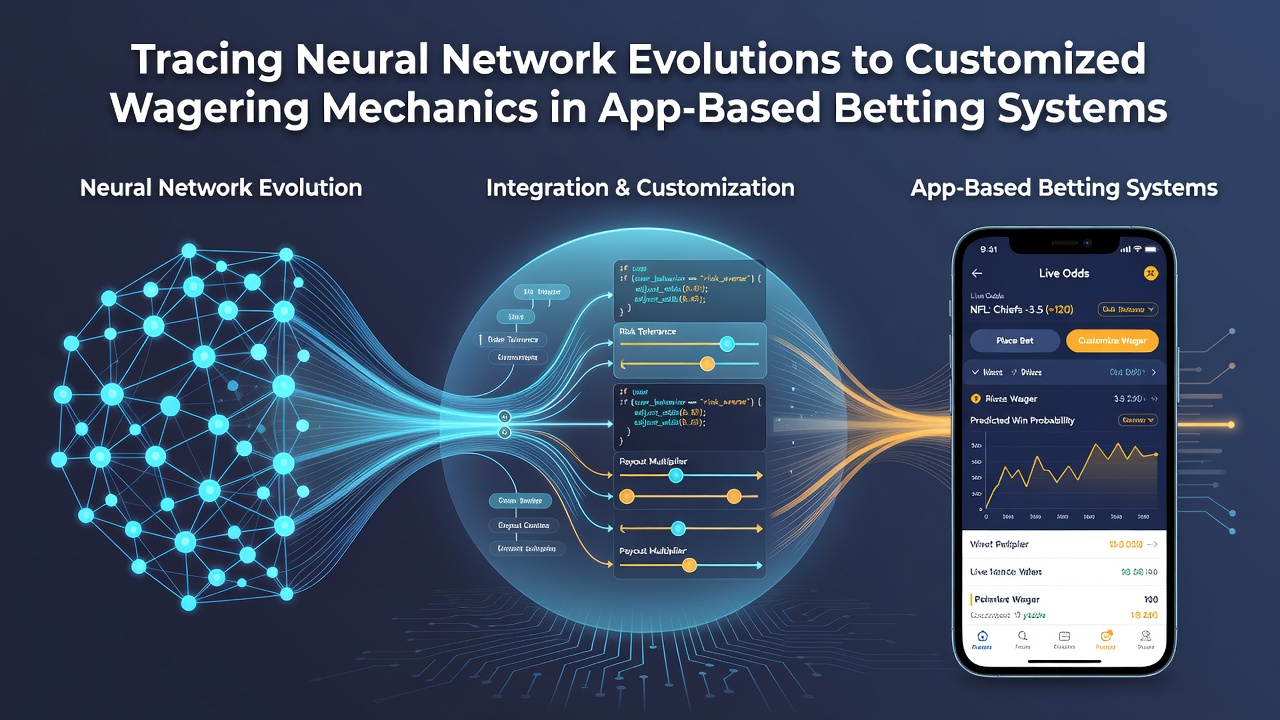
Neural networks entered gambling technology through basic pattern recognition systems in the late 1990s, when early models analyzed historical betting data to flag unusual wagering patterns, and developers soon expanded those foundations into more layered architectures that processed larger datasets from player activity logs. Those initial systems relied on feedforward networks that mapped inputs such as bet amounts and game types to outputs like risk scores, while subsequent iterations incorporated backpropagation techniques that allowed models to adjust weights based on outcome feedback loops.
Early Integration of Neural Architectures
Research teams at academic institutions first demonstrated how multilayer perceptrons could predict short-term betting trends by training on anonymized transaction records from land-based venues, and those proofs of concept migrated into mobile platforms once smartphone processors gained sufficient power to run inference tasks locally. Data from industry reports compiled by the Nevada Gaming Control Board shows that several operators began testing neural-driven fraud detection modules around 2012, and those modules gradually extended their scope to include personalization features that adjusted promotional offers according to individual session lengths.
Shift Toward Deep Learning Frameworks
Convolutional and recurrent neural networks replaced simpler perceptrons once graphics processing units became standard in data centers, enabling models to handle sequential data such as sequences of bets placed during live events, while attention mechanisms later allowed systems to weigh recent wagers more heavily than older ones. Observers note that this transition produced measurable gains in prediction accuracy for user retention metrics, with studies published by the University of Nevada, Reno documenting error rate reductions of up to 18 percent when recurrent layers replaced static decision trees in churn forecasting tasks.
Customization of Wagering Parameters
App developers now deploy generative adversarial networks to create synthetic user profiles that simulate diverse betting behaviors, and these synthetic datasets train recommendation engines that suggest wager sizes, odds formats, and game variants tailored to each account. Reinforcement learning agents further refine those suggestions by treating each completed bet as a reward signal, allowing the system to optimize for metrics such as session duration or average stake without direct human intervention. One study revealed that operators using these agents observed shifts in player engagement patterns within weeks of deployment, particularly when the models incorporated contextual data like device type and time of day.
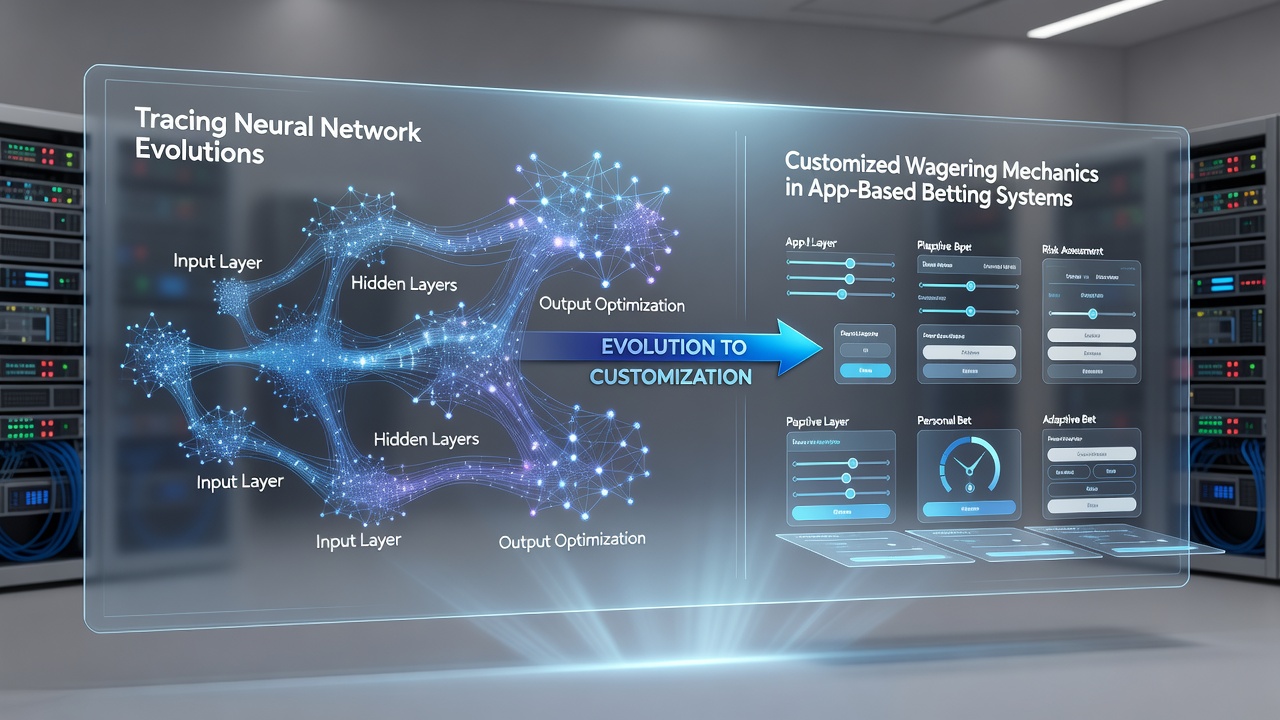
Dynamic odds adjustment represents another application area where neural networks process real-time market signals alongside historical user preferences to present individualized lines on the same event, and regulatory filings from the Australian Communications and Media Authority indicate that several licensed platforms introduced such features during 2024 testing phases. Those implementations rely on transformer-based models that parse live data streams from sports feeds while cross-referencing them against stored user histories, resulting in distinct interfaces for different account segments.
Technical Infrastructure Supporting Personalization
Edge computing nodes now host lightweight neural models that execute inference directly on user devices, reducing latency for in-app adjustments and allowing mechanics such as progressive stake suggestions to update without server round-trips. Federated learning protocols further enable operators to aggregate model improvements across multiple apps while keeping individual transaction details on local hardware, and reports from the Canadian Gaming Association document pilot programs that achieved compliance with provincial data residency rules through this distributed approach. As of June 2026, several major platforms have expanded these edge deployments to include real-time volatility filters that modify available bet types based on detected user risk profiles.
Regulatory and Security Considerations
Licensing authorities require documentation of model decision pathways to ensure transparency in customized wagering offers, and third-party auditors examine training datasets for bias that could produce uneven treatment across demographic groups. Encryption standards applied to neural network weights protect proprietary algorithms during transmission between development teams and production servers, while continuous monitoring pipelines flag drift in model performance that might affect fairness metrics. Industry associations have published guidelines that encourage periodic retraining cycles using fresh anonymized data to maintain alignment with evolving player behaviors.
Conclusion
The progression from basic pattern detection to sophisticated reinforcement and generative models has enabled app-based betting systems to deliver wagering mechanics that adapt to individual patterns while operating within established technical and regulatory boundaries. Continued refinement of these architectures depends on advances in hardware efficiency and data governance practices that support both personalization and compliance across jurisdictions.