Live Dealers Under the Lights: Tech and Training Behind Real-Time Casino Action
Tina Keller · Apr 14, 2026
Live Dealers Under the Lights: Tech and Training Behind Real-Time Casino Action
The Rise of Live Dealer Games in Online Casinos
Live dealer games have transformed online casinos since their debut in the early 2010s, blending the authenticity of brick-and-mortar venues with digital convenience; players now interact with real humans dealing cards or spinning roulette wheels from remote studios, while high-definition streams deliver every shuffle and spin in real time. Data from industry reports indicates that live casino revenue surged by over 50% between 2020 and 2025, driven by demand for immersive experiences that RNG-based games simply can't match. What's interesting is how this format bridges trust gaps—players see the action unfold live, eliminating doubts about software fairness that once plagued virtual tables.
And yet, behind those seamless broadcasts lies a complex ecosystem of technology and human expertise; studios operate around the clock, dealers manage multiple games simultaneously, and cutting-edge systems ensure latency stays under 100 milliseconds even across continents. Observers note that as of April 2026, adoption rates have hit new highs in regulated markets like Canada and Australia, where monthly active users on live platforms exceed 20 million globally according to recent figures from the Malta Gaming Authority.
Core Technologies Powering the Live Dealer Experience
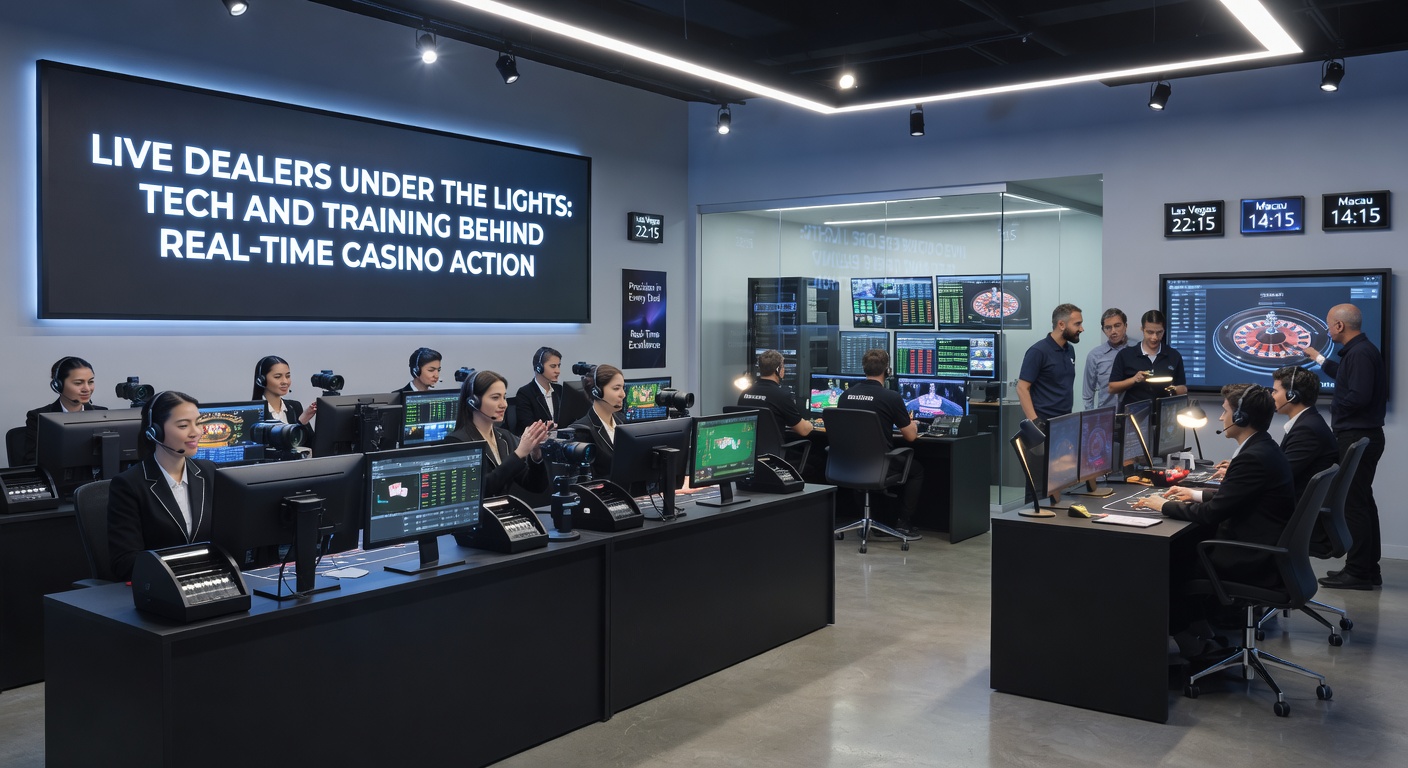
Multi-camera setups form the backbone of live dealer streams, with operators deploying up to 12 specialized cameras per table—some overhead for bird's-eye views of blackjack hands, others angled close for roulette ball drops; these rigs use 4K sensors and optical zoom lenses that track every card flip without distortion, while automatic tracking software follows the dealer's movements in real time. Turns out, optical character recognition (OCR) tech reads card values and outcomes instantly, feeding data to betting interfaces so players' wagers resolve without delays; research from Swedish tech firm Evolution Gaming reveals that this integration cuts error rates to below 0.01%.
But here's the thing: streaming protocols like WebRTC handle the heavy lifting for low-latency delivery, compressing feeds into adaptive bitrates that adjust to bandwidth fluctuations; a single stream might juggle 500 players at once, yet viewers report delays akin to watching broadcast TV. Servers cluster in data centers near major population hubs—think Eastern Europe for EU players, North America for US-facing ops—ensuring ping times hover around 20-50ms. And security? Blockchain-ledgered audit trails log every deal, verifiable by third-party testers; the New Jersey Division of Gaming Enforcement mandates such systems in licensed operations, where compliance audits confirm tamper-proof operations year after year.
Software overlays add the magic touch, superimposing player bets and chat bubbles directly onto the video feed without interrupting the dealer's flow; AI algorithms detect patterns like card counting attempts, flagging them discreetly to supervisors. One study from a Finnish university's gaming lab found that these tools boost table efficiency by 30%, allowing dealers to handle peak loads during prime hours.
Rigorous Training Regimens for Dealers
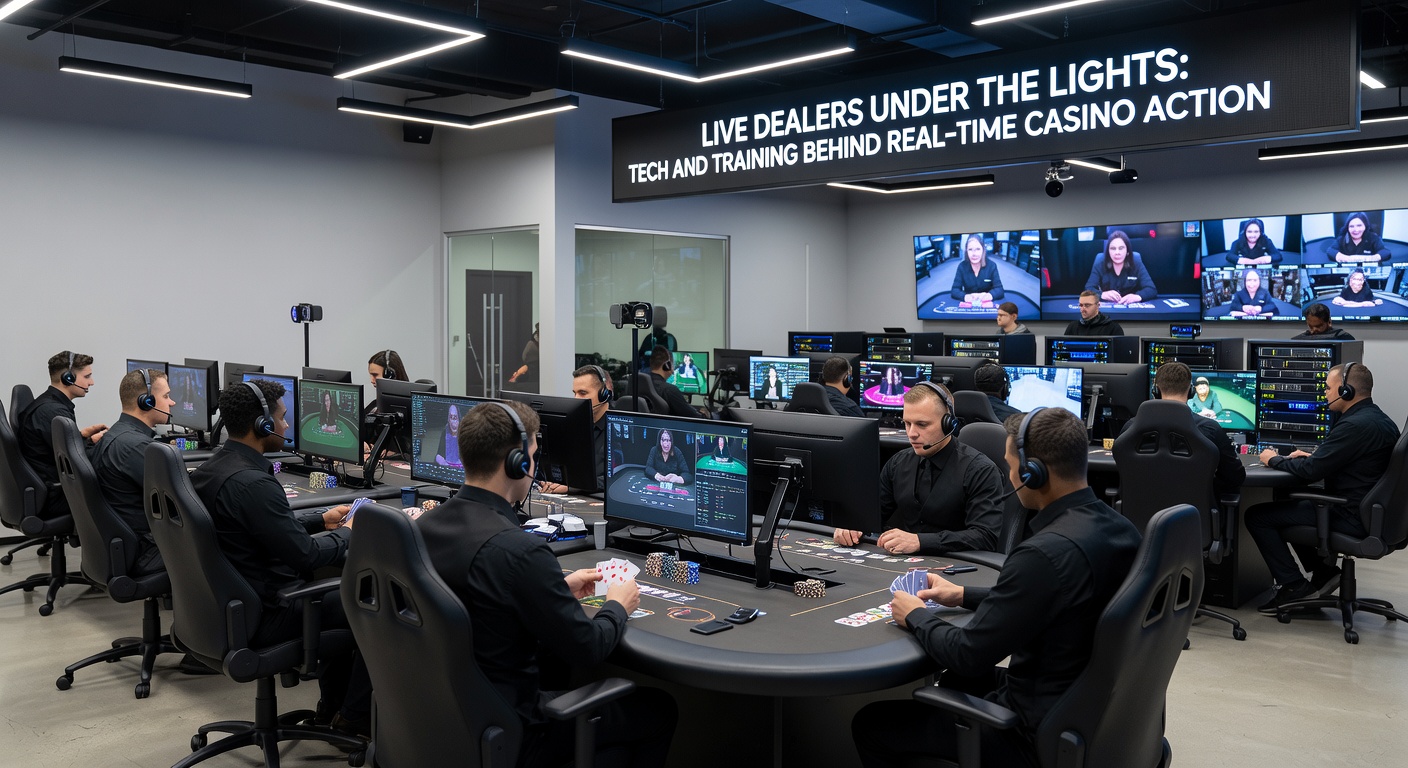
Dealers undergo months of intensive training before stepping under the lights, starting with game mastery—pros handle blackjack, baccarat, roulette, and poker variants flawlessly, memorizing rules across regional tweaks like European versus American roulette; programs span 6-12 weeks, blending classroom theory with hands-on practice on identical studio setups. Experts have observed that top providers like Prague-based studios require 200+ hours of supervised dealing, focusing not just on speed but precision under pressure.
Customer interaction forms another pillar, since dealers field questions via chat in real time—often in multiple languages, with multilingual teams covering English, Spanish, Mandarin, and more; role-playing scenarios simulate tough players, teaching de-escalation while maintaining house rules. Physical stamina training kicks in too, as shifts run 8-12 hours amid bright LED lights that mimic Vegas glamour but demand endurance; ergonomic coaching prevents repetitive strain, and vocal exercises ensure clear announcements carry through microphones.
Tech acclimation rounds it out—dealers learn to glance at side monitors showing player counts and bets without breaking rhythm, while RFID-embedded chips on tables auto-track wagers for accuracy. Take one case from a Riga studio where trainees logged 500 practice hours before certification; data shows certified dealers resolve 98% of hands error-free on live runs. And certification? Bodies like the International Gaming Standards Association oversee standards, ensuring skills transfer across operators.
Studio Environments: Lights, Sets, and 24/7 Operations
Studios pulse with controlled chaos, vast warehouses converted into themed sets—think opulent blackjack pits or sleek roulette arenas, all under 10,000-lux lighting rigs that eliminate shadows yet stay comfortable for long hauls; soundproof booths isolate dealer audio, piping crystal-clear commentary over ambient casino tracks. Ventilation systems cycle air hourly, combating heat from gear and bodies during peak Asian morning slots that align with evening play worldwide.
Now, scalability defines these hubs: a single facility might host 200 tables across 50,000 square feet, with robotic arms swapping game wheels mid-shift; backup generators and redundant internet lines prevent downtime, as even a minute offline costs thousands in wagers. Observers note how green-screen tech enables virtual table overlays, letting one physical setup serve infinite digital rooms—a trick that exploded post-pandemic.
Staffing rotates in waves, with sleep pods and gyms on-site for recovery; one Latvian operation reports 99.9% uptime thanks to these logistics. It's noteworthy that as of April 2026, hybrid VR integrations let players "enter" studios via headsets, piloted in Australian trials where engagement spiked 40% per session logs.
Regulatory Oversight and Player Protections
Regulators enforce strict protocols to safeguard integrity, mandating independent audits of streams and dealer conduct; in Canada, Ontario's iGaming framework requires geofenced access and real-time RNG hybrids for side bets, while Australian states like New South Wales demand licensed studios pass quarterly tech inspections. Figures from industry trackers reveal that licensed live ops boast 25% higher retention rates, tied to verified fairness.
Anti-money laundering checks scan chats and bets via AI, flagging anomalies; player limits and session timers activate automatically, promoting responsible gaming. Research indicates these measures cut problem play incidents by 35% in monitored jurisdictions.
Emerging Innovations on the Horizon
Augmented reality overlays promise to redefine immersion, projecting holographic chips onto players' screens; 5G rollouts slash latency further, enabling mobile-first experiences that rival land-based speed. AI-driven personalization tailors camera angles to individual prefs, and blockchain verifies every outcome publicly.
One pilot in the EU tested dealer avatars for off-peak hours, blending human oversight with digital proxies; results showed no dip in satisfaction scores. By late 2026, experts predict 60% of live traffic will flow through these advancements, per forecasts from gaming analytics firms.
Challenges persist, though—like bandwidth divides in emerging markets—but scalable cloud tech addresses them, democratizing access.
Conclusion
Live dealers thrive on a synergy of razor-sharp tech and honed human skills, delivering real-time casino thrills that keep players hooked; from OCR cameras capturing every edge to dealers trained for marathons under unrelenting lights, the machinery hums with precision. Data underscores the format's dominance, with revenues projected to double by 2030 amid regulatory polish and innovation waves. Those tuning in get more than games—they witness a high-stakes ballet of tech and talent, streamed faultlessly worldwide.