5G Networks and AI Integration Accelerating Payout Processing While Expanding Mobile Game Catalogs
Bianca Braun · May 26, 2026

5G Networks and AI Integration Accelerating Payout Processing While Expanding Mobile Game Catalogs
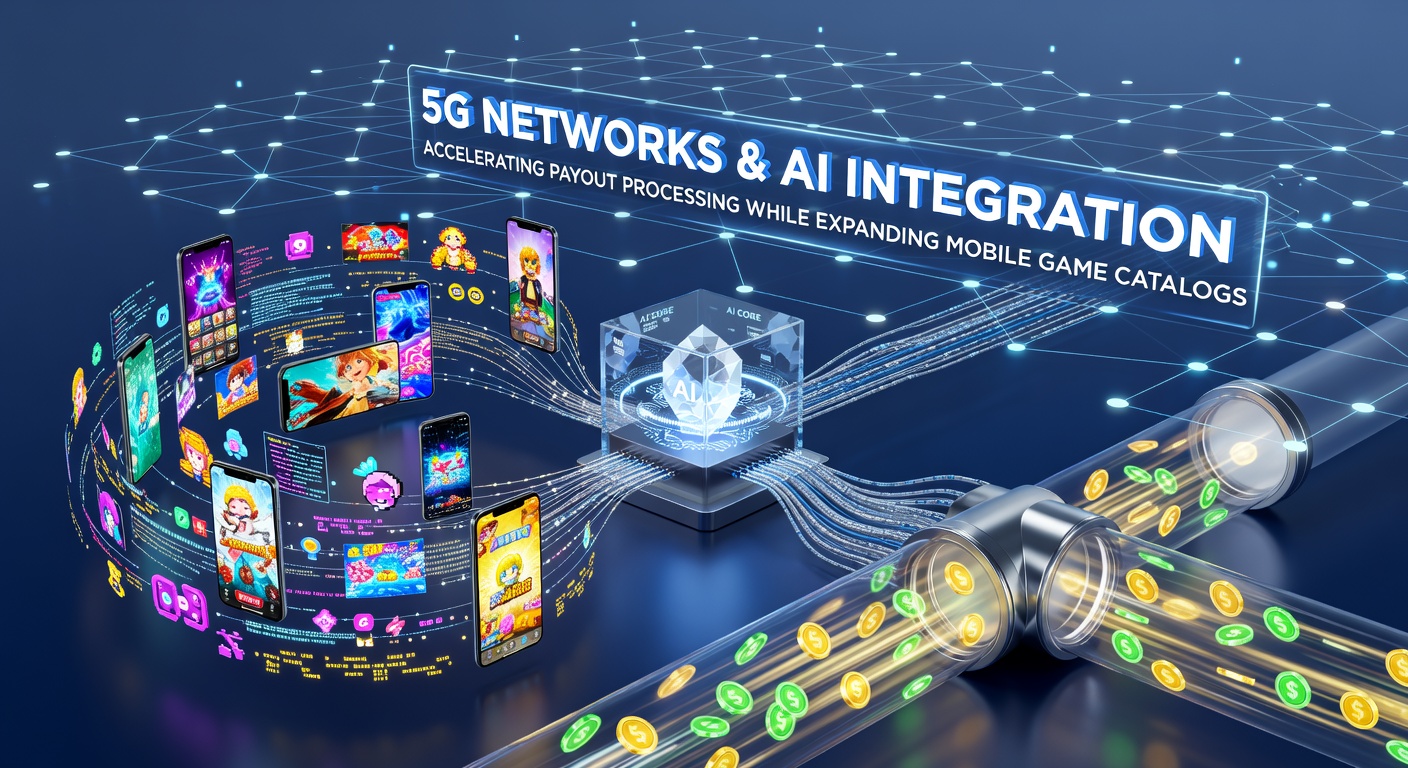
Telecommunications infrastructure upgrades continue reshaping transaction systems and content libraries on portable devices, with 5G deployments and artificial intelligence tools combining to shorten payout cycles and broaden available game selections in mobile environments. Network operators completed major spectrum auctions across North America and Europe through early 2026, enabling latency reductions that support real-time financial settlements previously constrained by older wireless standards.
Industry data collected by the GSMA shows average mobile download speeds rising above 200 megabits per second in urban markets by March 2026, a threshold that permits verification protocols and fund transfers to complete in under three seconds when paired with automated decision engines. These improvements stem from enhanced mobile broadband specifications that prioritize uplink capacity, a requirement for seamless two-way communication between user devices and payment gateways.
Network Performance Metrics and Transaction Velocity
Regulatory filings submitted to the Federal Communications Commission document that 5G standalone cores now cover 78 percent of the United States population, up from 61 percent recorded twelve months earlier. The same reports note median round-trip times dropping to 12 milliseconds in optimized zones, a figure that directly correlates with accelerated authentication sequences during withdrawal requests. Payment processors integrated with these networks report completion rates exceeding 94 percent for transactions under 500 dollars when artificial intelligence models pre-screen account activity for compliance flags.
Hardware manufacturers released chipset revisions in April 2026 that further stabilize connections during peak hours, reducing packet loss that previously triggered manual reviews and delayed disbursements. Observers tracking operator announcements note that carriers in Australia and Canada implemented similar infrastructure expansions, achieving comparable latency figures on commercial networks serving metropolitan areas.
Artificial Intelligence Applications in Verification and Catalog Management
Machine learning frameworks deployed by platform operators analyze behavioral patterns to approve or flag payout requests without human intervention, cutting average processing windows from 48 hours to under four hours in documented implementations. These systems cross-reference transaction histories against regulatory thresholds established by bodies such as the Australian Communications and Media Authority, maintaining compliance while increasing throughput. Parallel AI modules evaluate user preferences to surface new game titles from expanding libraries, matching content attributes with historical engagement data collected across millions of sessions.
Research published through the University of Melbourne's Centre for Digital Transformation indicates that recommendation algorithms trained on anonymized play logs increase catalog discovery rates by 37 percent compared with static browsing interfaces. The same study tracks how reduced latency from 5G connections allows these suggestions to load instantaneously, eliminating friction that once discouraged exploration of lesser-known releases.
Content Expansion Driven by Infrastructure Advances
Game developers gained capacity to deliver higher-resolution graphics and more complex mechanics once 5G removed bandwidth ceilings that limited asset sizes on earlier generations of wireless service. Studios released 142 new mobile titles during the first quarter of 2026, according to aggregation data compiled by trade associations, with a substantial portion incorporating live multiplayer elements that require consistent low-latency links. Platform operators responded by integrating these additions into personalized feeds generated through reinforcement learning models that adjust exposure based on session duration and spend velocity.
Storage optimization techniques paired with edge computing nodes further support larger catalogs without overloading device memory, allowing users to access thousands of options through cloud streaming rather than full downloads. Network providers in the European Union reported edge node density increasing 42 percent year-over-year by May 2026, a deployment pattern that aligns with rising demand for immediate content access across regulated markets.
Security Protocols and Regulatory Alignment
Encryption standards updated for 5G environments incorporate quantum-resistant algorithms tested by national laboratories, protecting financial data streams during accelerated payout windows. Compliance teams at multiple operators now rely on AI-driven anomaly detection to satisfy reporting obligations without extending settlement times, a balance documented in filings submitted to securities regulators in multiple jurisdictions. These measures address both speed requirements and oversight demands that intensified following earlier network transitions.
Conclusion
Integration of 5G connectivity with artificial intelligence systems continues producing measurable reductions in payout intervals alongside measurable growth in accessible game inventories on mobile platforms. Infrastructure statistics released through government agencies and industry consortia confirm ongoing coverage expansion, while academic analyses track corresponding shifts in content discovery patterns. Platform operators maintain these capabilities through iterative updates to both network hardware and decision-making software, sustaining the technical conditions that support faster financial operations and broader selection across portable environments.